
Summer travel season is just around the corner – and so is a fresh wave of scams designed to catch you when your guard is down. Fake booking websites, public Wi-Fi risks, and USB charging threats are well-documented dangers by now. What’s catching even experienced travellers off guard are the newer tactics scammers have quietly added to their playbook.
What makes these scams especially effective is something worth understanding: travel puts us in a unique psychological state. We’re excited, distracted, and operating outside our normal routines. Scammers know this. They use urgency, fear of losing a reservation, and the unfamiliarity of being in a new place to short-circuit our usual judgment. Recognizing that emotional pressure is part of the playbook is itself one of your strongest defences.
The key to protecting yourself follows a simple pattern: slow down before reacting, verify any request through a channel you trust, and talk to someone you know if something feels off. Let’s look at how that applies to the scams travellers are seeing right now.
Your Luggage Tag Knows Too Much
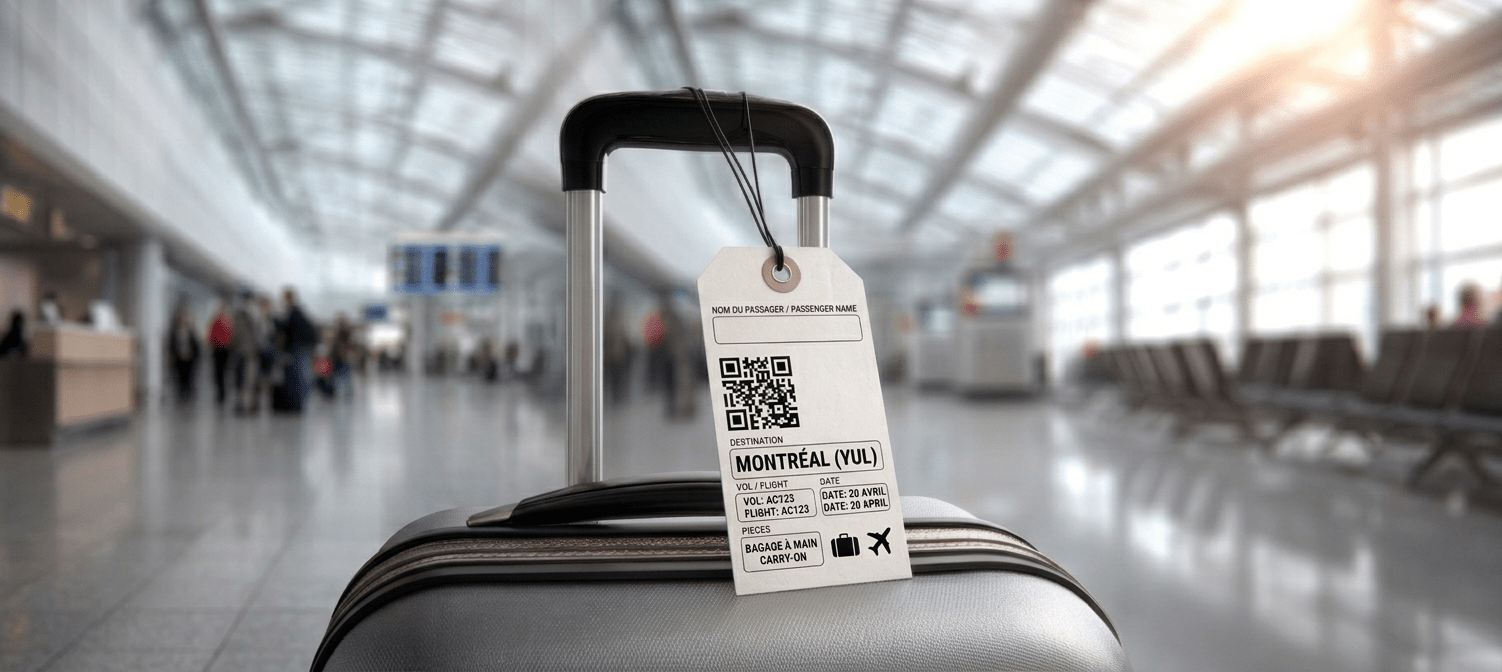
Here’s something most travellers don’t think twice about: the adhesive baggage tag airlines attach to your suitcase handle. It contains your name, flight number, travel date, destination – and sometimes your booking reference, bag weight, and city of origin.
Scammers have figured out how to use that information. The tactic is straightforward: they watch for travellers discarding their baggage tags at the airport, dig them out of the trash, and use the details to file fraudulent “missing items” claims with the airline – impersonating you. It’s causing real problems for airlines trying to reimburse legitimate claims, and it puts your personal information in the hands of someone who can use it for further identity theft.
Boarding passes carry similar risks. The barcode on your boarding pass – whether printed or on your phone screen – can be scanned with a basic app to reveal your booking code, frequent flyer number, and other personal details. Even just holding your boarding pass visibly in a queue gives someone nearby the chance to “shoulder surf” and collect information they can use to access your account.
How to protect yourself:
- Keep your boarding pass stowed until you need to show it – don’t leave it visible in your hand or seat pocket
- Never post photos of your boarding pass or luggage tags on social media
- Take your luggage tags home and shred them along with any printed boarding passes – don’t discard them at the airport, on the plane, or at your hotel
- If you use a digital boarding pass, clear it from your phone’s wallet after your trip
The QR Code You Shouldn’t Have Scanned
QR codes have become part of the travel experience – restaurant menus, museum tickets, transit maps, parking meters. But scammers are exploiting that trust by placing fraudulent QR codes over legitimate ones at tourist hotspots, restaurants, and kiosks.
This tactic, sometimes called “quishing,” redirects you to a phishing site designed to steal your payment information or login credentials – or in some cases, installs malware on your device. The problem is that there’s no easy way to tell whether a QR code is legitimate just by looking at it.
How to protect yourself:
- Only scan QR codes provided directly by staff or clearly displayed on official signage – be wary of codes that look like they’ve been stuck over an existing one
- Before entering any information on a site you’ve reached through a QR code, check the URL carefully for misspellings or unusual domains
- If a restaurant or attraction offers an alternative to scanning – such as a physical menu or a staff member who can help – use it
- Consider disabling your phone’s automatic QR code action so you can preview the URL before it opens
That Text From Your Hotel Isn’t Real
A newer scam targets travellers with text messages that appear to come from their hotel or booking platform. These messages look convincing because they often include your actual reservation number, check-in dates, and the hotel’s name. They typically claim there’s a billing issue – a failed credit card authorization, or an additional charge that needs approval – and include a link to “verify your payment details.”
The scam works because it exploits a moment of vulnerability. When you’re excited about an upcoming trip or already checked in, a warning about your reservation being cancelled feels urgent and real. But legitimate hotels and booking platforms will not ask you to resolve payment issues through a text link. If there’s a real billing concern, they’ll address it at the front desk or through the official app you booked with.
In a related twist, scammers are also mining social media vacation posts to figure out where travellers are staying – using clues in photos like hotel signage, pool layouts, or restaurant interiors – and then sending targeted fake billing messages during the stay.
How to protect yourself:
- If you receive an unexpected text about your reservation, don’t click the link or call the number provided – contact the hotel directly using the phone number from the booking platform you used
- Treat any text that creates urgency around your booking with suspicion, especially if it asks you to act within a time limit
- Wait until after you’ve checked out – or returned home – to share vacation photos on social media, so scammers can’t target you in real time
- If you’re already at the hotel, go to the front desk in person to verify any billing concerns
Your Travel Companion for Your Identity
We’ve covered a lot of ground here, but it all comes back to the same principle: scammers succeed when they catch you off guard. The best defence is building habits that work even when you’re distracted – pausing before reacting, verifying through trusted channels, and talking to someone you trust when something doesn’t feel right.
If you suspect your information has been compromised while travelling, our identity restoration specialists are just a phone call away to help you take immediate protective steps, no matter where you are. It’s one less thing to worry about when you should be enjoying your vacation.
Remember to stay vigilant, stay informed, and stay safe.